Ecotricity NZ (not to be confused by the power company of the same name but operating in the U.K.) has a very confusing bill. The invoice breaks down the costs of supplying electricity into various components, leading to many new customers being confused about exactly what they are being charged for. How bad is it?
TL;DR
Ecotricity NZ’s invoices are confusing due to the detailed breakdown of charges, which can be difficult to understand for new customers. While the invoice provides transparency, it may not align with the advertised prices at first glance, leading to confusion about the actual cost of electricity. I check to see if the invoiced amounts are correct, and suggest an improvement (in my opinion) to the invoice layout, making it easier for customers to understand their charges.Being a rather techy person at heart, I love how the invoice is broken down into the various components for great transparency.
However, I totally get how confusing it can be for new customers, especially when it is simply marketed on their website as a single price per item type (e.g., “daily charge” $1.618, “peak import rate” 40.77c…). At the same time, I wonder if some of the figures presented are rounded off, as the numbers presented doesn’t add up correctly sometimes.
An Example Bill
Here’s an example of an Ecotricity invoice cost breakdown. It is from my bill for June 2026. (Note that the prices listed in this section does not include GST.)
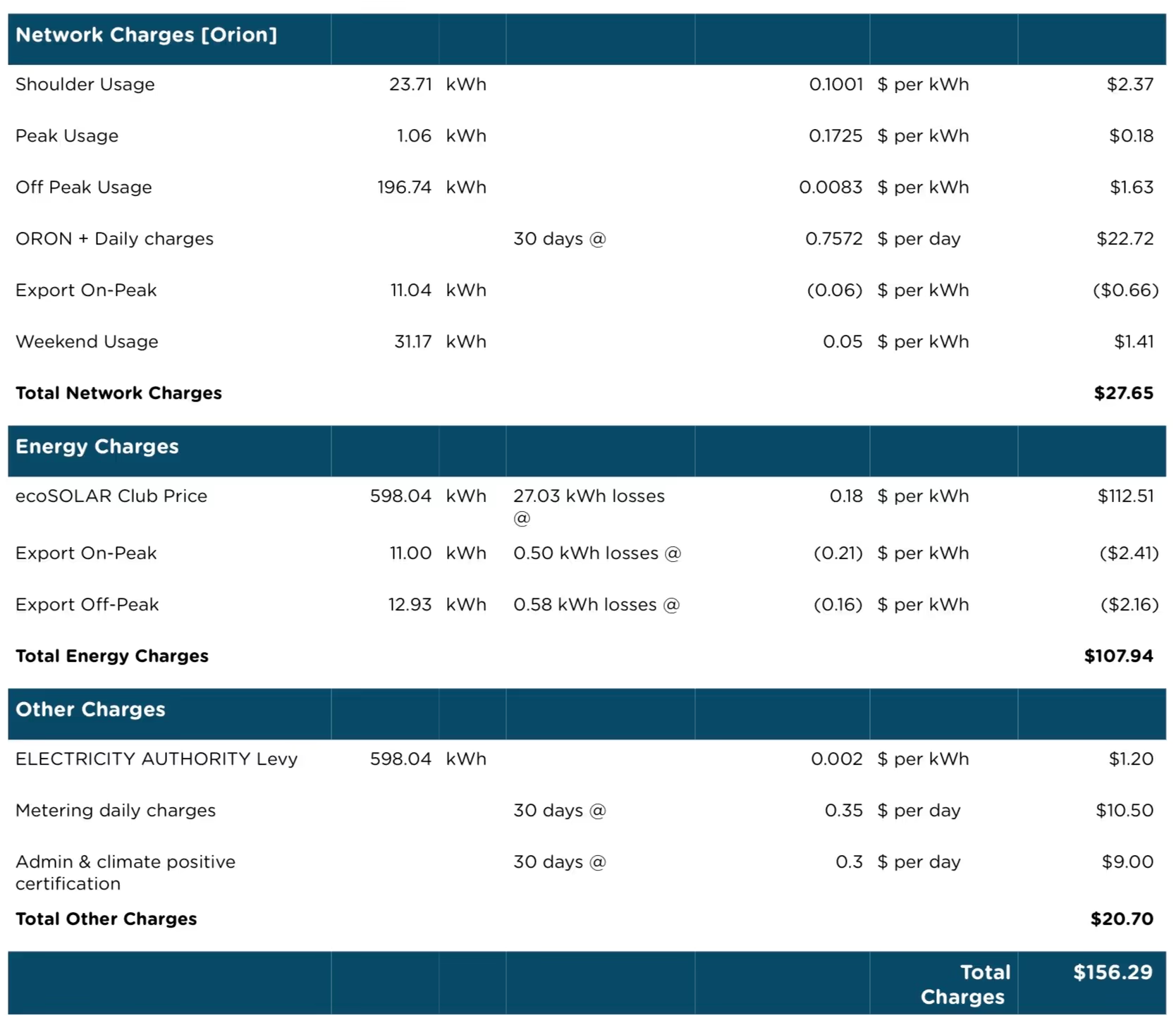
Wait… what? What are all these line entries? I thought I’m getting the following prices (GST-inclusive shown below) quoted on the website?? Why am I being charged extra for “Admin & climate positive certification” that wasn’t declared when I signed up…?!
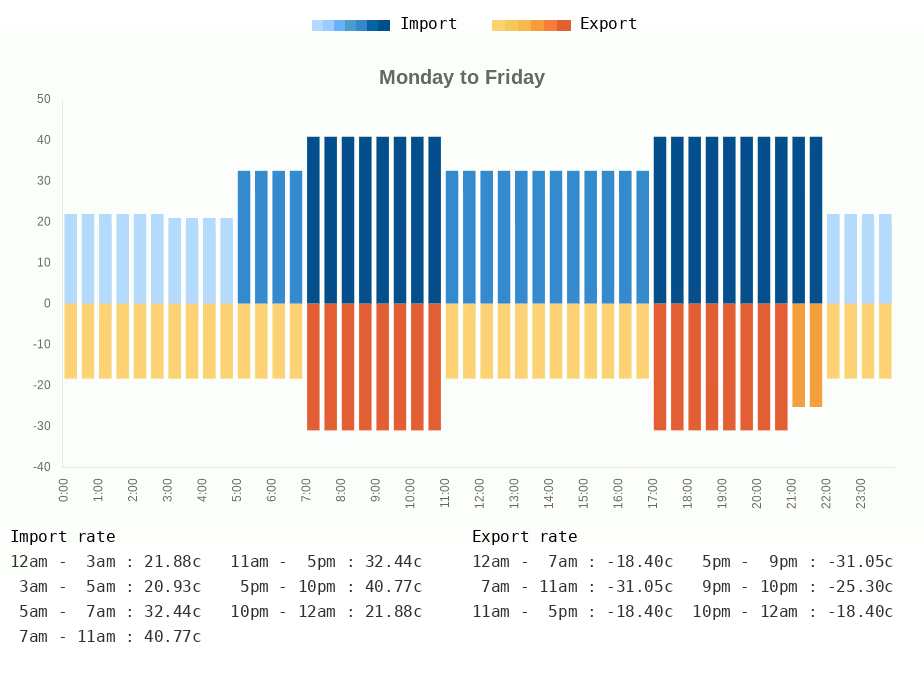
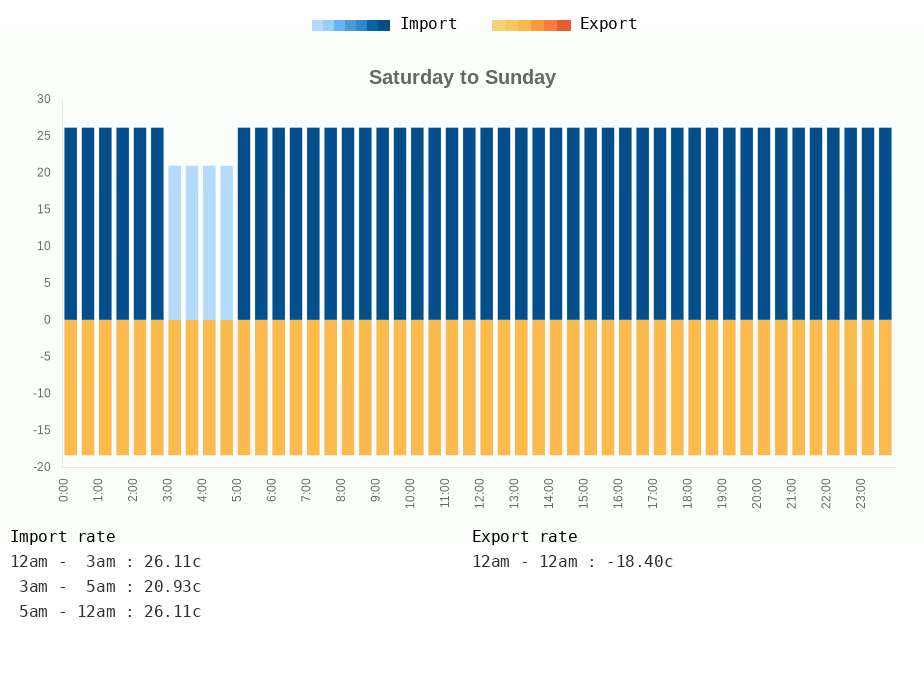
Unless you’ve made a mistake and signed up for a different tariff that you think you signed up for, you are most likely being charged as advertised (or very close to it) on the website. The invoice simply have the price broken down separately into its components that make up that price.
Price Breakdown Investigation
Let’s review a few of the line items, and see if it adds up to the price advertised on the website.
Daily Charge
The daily charge advertised to me when I signed up was 1.6183. How is this charge being itemised in the invoice?
| Line Item | Cost |
|---|---|
| Orion + Daily charges | 0.7572 |
| Metering daily charges | 0.35 |
| Admin & climate positive certification | 0.3 |
| Total Total (with GST) | 1.4072 1.61828 |
Power Usage
Another common source of confusion is how many units of electricity (kWh) was the invoice for, and how much do they cost. The confusion likely stems from the fact that the total amount listed in the Network Charges section does not match up with the total amount listed in the Energy Charges section, since surely all of the energy is being delivered by the same lines belonging to the same network!
| Total kWh in Network Charges section (import only) | 252.68 |
| Total kWh in Energy Charges section (import only) | 598.04 |
I found this confusing at first, but when I remembered that there are actually five different pricing tiers for electricity depending on time of day, and whether it is a weekend or a weekend, it starts to make sense.
These periods are “peak”, “shoulder” (or mid-peak), “off-peak”, “super off-peak”, and “weekend”.
You’ll notice that only four of these are listed in Network Charges section – “super off-peak” is missing. Therefore, it is implied in this section that my “super off-peak” usage is 345.36 kWh.
So… are the charges listed in the invoice correct? Let’s see…
| Energy Charge | Network Charge | E. A. Levy | Total | Total w/GST | |
|---|---|---|---|---|---|
| Peak | 0.18 | 0.1725 | 0.002 | 0.3545 | 0.407675 |
| Shoulder | 0.18 | 0.1001 | 0.002 | 0.2821 | 0.324415 |
| Off-Peak | 0.18 | 0.0083 | 0.002 | 0.1903 | 0.218845 |
| Weekend | 0.18 | 0.005 | 0.002 | 0.232 | 0.26681 |
| Super Off-Peak | 0.18 | – | 0.002 | 0.182 | 0.2093 |
- this price differs from advertised… as of today (10-Jul) the Ecotricity website still lists Weekend price as 26.11c (inc. GST) ↩︎
Interestingly, the Weekend pricing appears to be incorrect, where the invoice bills me at a rate higher than advertised on the website. However, the rest are accurate (rounding aside).
How This Can Be Improved
I reckon that this section can be improved to reduce confusion by first presenting the “ecoSOLAR Club Price” usage first as “total energy usage”, while the Network Charges for “peak”, “shoulder”, “off-peak” and “weekend” can be presented as a network charge or surcharge.
For example…
| Line Item (energy usage) | Units | Price | Total |
|---|---|---|---|
| Total energy usage (including line losses of 27.03 kWh) | 625.07 kWh | 0.18 | 112.51 |
| Network surcharge for peak usage | 1.06 kWh | 0.1725 | 0.18 |
| Network surcharge for shoulder usage | 23.71 kWh | 0.1001 | 2.37 |
| Network surcharge for off-peak usage | 196.74 kWh | 0.0083 | 1.63 |
| Network surcharge for weekend usage | 31.17 kWh | 0.05 | 1.56 |
| Daily charges | 30 days | 1.6183 | 48.55 |
| Subtotal (before GST) | 166.80 |
| Line Item (energy export credits) | Units | Price | Total |
|---|---|---|---|
| Peak energy export (including line loss credits of 0.5 kWh) | 11.5 kWh | 0.21 | 2.42 |
| Network contribution for peak energy export | 11 kWh | 0.06 | 0.66 |
| Off-Peak energy export (including line loss credits of 0.58 kWh) | 13.51 kWh | 0.16 | 2.16 |
| Credit subtotal (before GST) | 5.24 |
I know that in the example above, the total (usage minus credits) does not add up to the same as in my actual invoice. The Ecotricity invoice line items can seem to be inaccurate… and I can only guess that it’s due to rounding issues.
For example, the Weekend Network Charge is listed in my invoice as 0.05, and with 31.17 kWh usage, it should totalled $1.5585, but was instead listed as $1.41…?! My suspicion is that even the base rate of 0.18 is actually rounded off as well, with the true figure used in the calculations being something different.
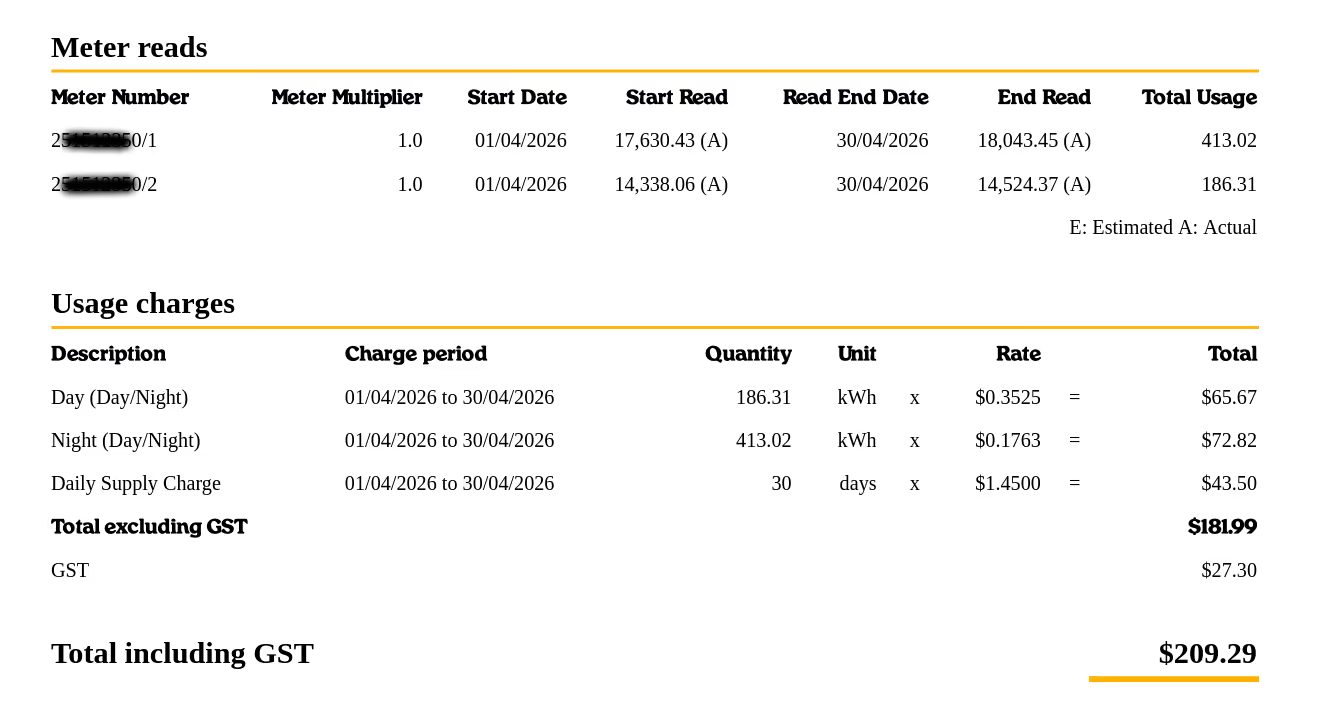
Example of a Clean, Easy-to-Understand Invoice
Before installing solar and switching to Ecotricity, I was with Toast Electric. While they only have two price tiers – “Day” and “Night”, look how elegantly they present their usage breakdowns. It is very much a shame that independent retailers that are not part of the gentailers (electricity generators who are also retailing direct to the public) cannot compete effectively on price in New Zealand.